
Imagine slipping on a ring that can turn your everyday world into a digital playground. That’s the magic of augmented reality rings. These sleek gadgets promise to blend the virtual and real like peanut butter and jelly—except without the sticky mess. Whether you’re navigating your busy life or impressing friends with dazzling holograms, this tiny tech marvel packs a punch.
As technology evolves, so do our expectations. Gone are the days of clunky headsets and awkward setups. With an augmented reality ring, it’s all about convenience and style. It’s like having a personal assistant, a gaming console, and a fashion statement wrapped around your finger. Get ready to explore a universe of possibilities that’s just a flick of your wrist away.
Overview of Augmented Reality Rings
Augmented reality rings blend the digital and physical worlds, providing users with unique interactive experiences. These devices feature advanced technology that offers diverse applications.
What Is an Augmented Reality Ring?
An augmented reality ring is a wearable device designed to deliver virtual information directly to users’ fingertips. Users can interact with digital displays projected from the ring, allowing for hands-free navigation of apps and social media. Fashionable and compact, these rings combine aesthetics with advanced functionalities, making them appealing for both tech enthusiasts and casual users.
How Do Augmented Reality Rings Work?
Augmented reality rings operate using sensors and projection technology. Sensors detect user gestures, enabling control through simple hand movements. Projection systems generate visuals above the surface of the ring, creating an interactive experience without the need for bulky headsets. Connectivity with smartphones or tablets enhances functionality, allowing access to various applications and notifications.
Key Features of Augmented Reality Rings
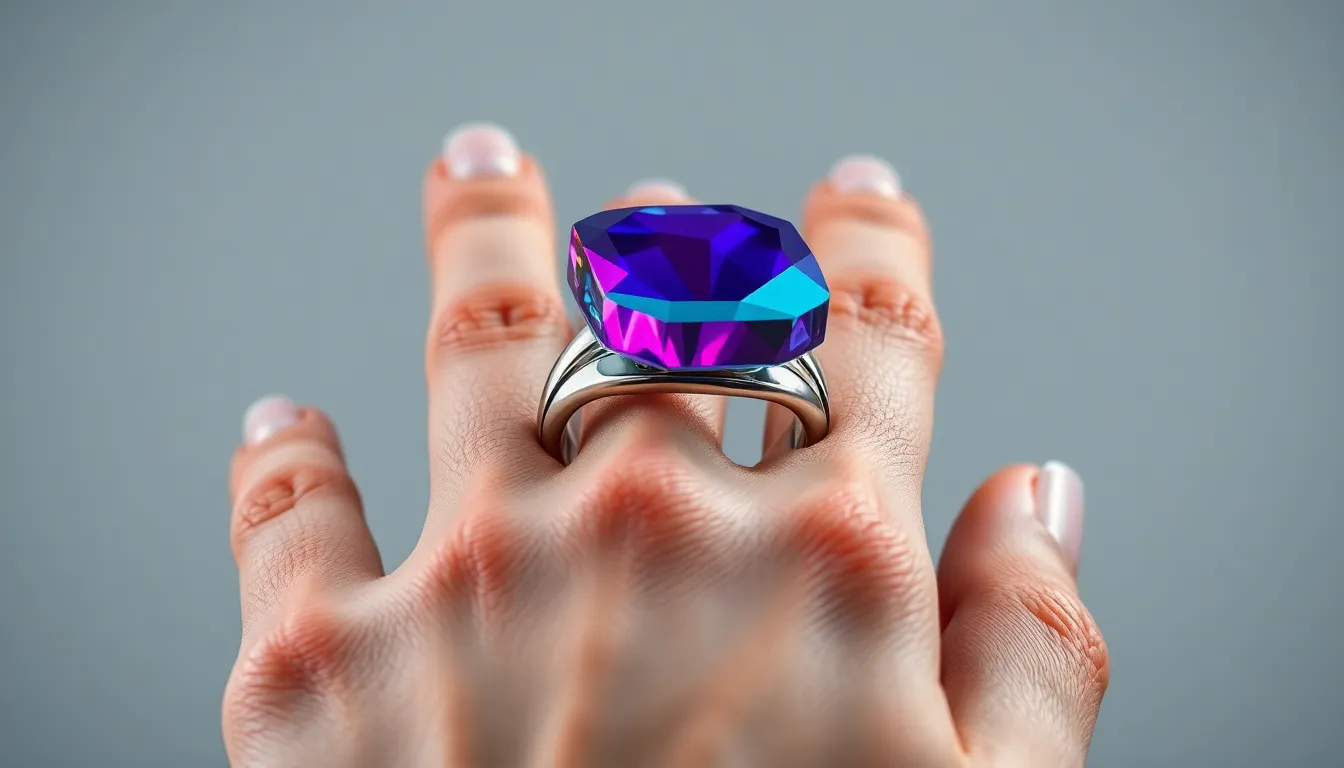
Augmented reality rings combine style and practicality, offering users unique experiences. Key features include innovative design elements and intuitive interaction methods.
Design and Materials
Manufacturers create augmented reality rings using high-quality materials such as metal, silicone, and glass. Each material contributes to the ring’s durability and aesthetic appeal. Sleek designs allow comfort and facilitate everyday wear. Colors and finishes offer personalization, catering to diverse tastes. Compact form factors ensure users can easily integrate these rings into their lifestyles.
User Interface and Interaction
User interfaces focus on simplicity and responsiveness, allowing seamless interaction. Gesture recognition provides an intuitive way to navigate applications. Touch-sensitive surfaces enhance control, enabling users to swipe or tap for various functions. Visual projections appear above the ring, offering real-time information during interactions. Notifications from connected devices keep users informed without the need for screens. This combination creates an engaging experience while keeping users connected.
Benefits of Augmented Reality Rings
Augmented reality rings provide significant advantages, enhancing user engagement while offering practical functionality. These devices transform the way individuals interact with their environment.
Enhanced User Experience
Interaction with augmented reality rings is intuitive and engaging. Users navigate apps effortlessly through gestures, enjoying a hands-free experience. Visual projections create immersive interactions, allowing users to access information instantly. Communication becomes seamless, as notifications from smartphones appear directly above the ring’s surface. The stylish design ensures comfort, making daily wear pleasurable. Enhanced usability promotes efficiency in managing tasks, reducing the time spent looking at screens. This user-friendly approach caters to both tech-savvy individuals and casual users, making augmented reality rings appealing to a broad audience.
Practical Applications in Daily Life
Augmented reality rings find practical applications in various aspects of daily life. In professional settings, these rings streamline workflows by providing real-time data at users’ fingertips. Individuals can check notifications, schedule updates, or control smart devices without interruption. In fitness, users monitor performance metrics during workouts, which enhances workout efficiency. Social interactions also benefit as users share content directly through intuitive gestures. These rings empower creativity, offering tools for designers and artists to visualize projects effortlessly. Their versatility extends to gaming, where they create immersive experiences by blending the virtual world with reality.
Challenges and Limitations
Despite their innovative design, augmented reality rings face several challenges. Limitations arise predominantly from technical constraints and user adoption.
Technical Limitations
Technical limitations hinder the full potential of augmented reality rings. Battery life often restricts usage duration, affecting overall user experience. Processing power plays a significant role, as current technology may struggle with complex applications. Connectivity issues can arise, causing disruptions when syncing with smartphones or tablets. Additionally, the need for effective gesture recognition may present challenges in environments with varying lighting. Without advancements in these areas, the functionality and practicality of augmented reality rings remain restricted.
User Adoption and Market Reception
User adoption poses another hurdle for augmented reality rings. Many consumers remain unfamiliar with the technology, leading to hesitation in embracing it. Additionally, price remains a barrier for some, as high-quality rings often command premium prices. Competition with other wearable technologies complicates market reception; consumers might favor more established devices. Trust in new technology also plays a role, as potential users may question reliability and durability. Addressing these concerns could enhance acceptance and expand the market for augmented reality rings.
Augmented reality rings represent a significant leap in wearable technology, merging style with advanced functionality. Their hands-free capabilities and intuitive gesture controls offer a glimpse into the future of personal devices. As these rings continue to evolve, they promise to enhance daily life in ways that traditional technology can’t match.
While challenges like battery life and user adoption remain, the potential for augmented reality rings is immense. By addressing these hurdles, manufacturers can unlock greater acceptance and broaden their market reach. With their unique blend of practicality and innovation, augmented reality rings are poised to redefine how users interact with the digital world.