
In the ever-evolving landscape of technology, two terms frequently emerge from the tech corner, mixed reality (MR) and augmented reality (AR). At first glance, they might seem similar, poised to mess with human perception. But wait. Before you jump into a rabbit hole of headsets and holograms, let’s break it down. Understanding these concepts can feel like trying to distinguish between a slice of pizza and a calzone: both delicious, but oh so different. Let’s take a moment to uncover the nuances that set these two realms apart, so you can navigate this tech terrain like a pro.
What Is Mixed Reality?
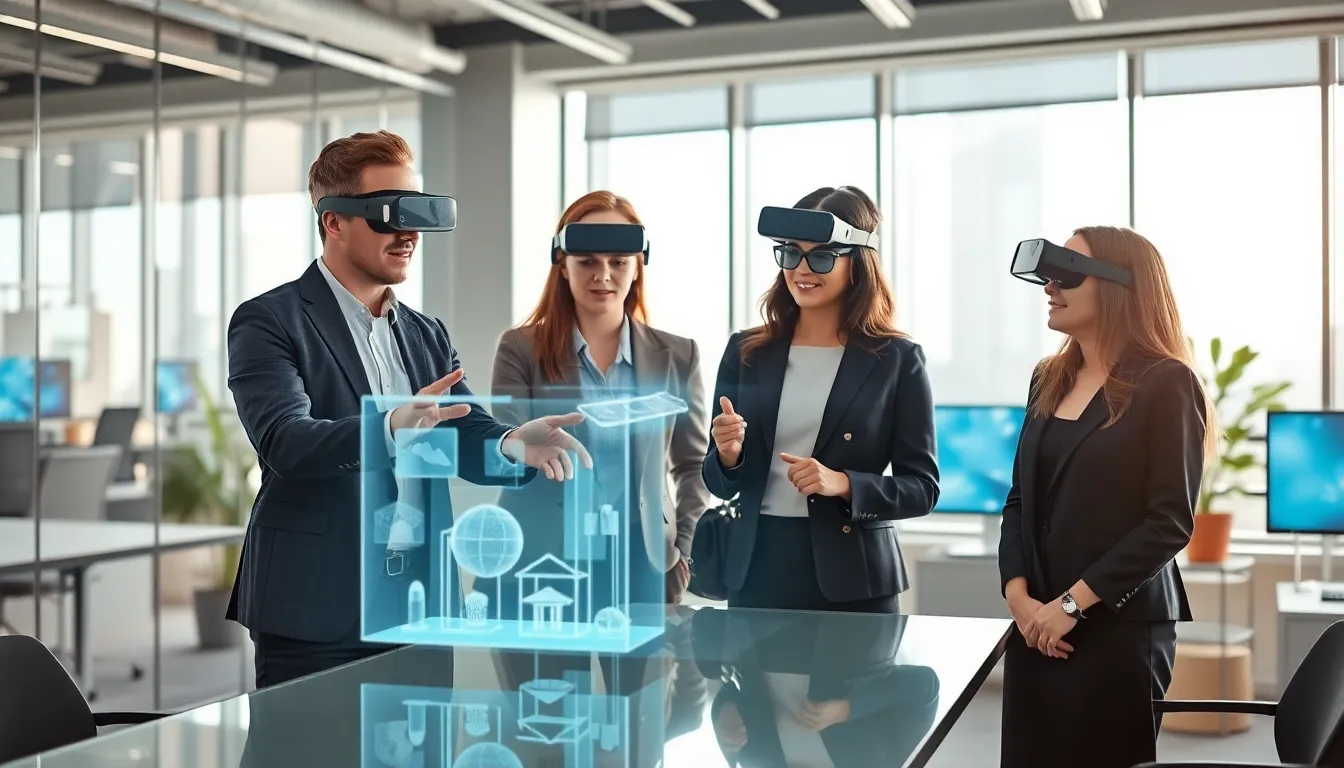
Mixed reality is where the real world and virtual elements intertwine seamlessly. Think of it as the ultimate mash-up of reality and virtual experiences, creating a new environment where physical and digital objects coexist and interact in real time. With MR, users aren’t just looking at overlays on their screen: they actively engage with both worlds.
Key Features of Mixed Reality
- Interaction: Unlike AR, where users simply view digital enhancements, mixed reality allows for interaction. You can pick up virtual objects as if they were real.
- Environmental Awareness: MR systems understand and respond to the physical environment. This means objects can be placed in specific locations and will behave realistically, adding depth to user experiences.
- Persistence: Objects in mixed reality can remain in the same spot even after you look away and return, creating a more immersive experience.
- Complexity: The technology behind MR involves sophisticated sensors and processors, often requiring more powerful hardware compared to AR.
The potential for mixed reality across various industries is astounding, combining the best of both realities.
Applications of Mixed Reality
Mixed reality is not merely a futuristic fantasy: it’s actively shaping industries today. Here are a few standout applications:
- Education: Imagine students walking through historical events or interacting with 3D models of the human body. MR enhances learning by making it interactive and engaging.
- Healthcare: Surgeons can practice procedures using mixed reality simulations, honing their skills in a safe environment.
- Gaming: The gaming world has seen an explosion of MR titles that enable players to interact with their surroundings more intuitively. Games like “Pokemon Go” laid a solid foundation for future developments.
- Architecture and Design: Architects can visualize their designs in real-world settings, helping clients see how structures would actually fit into existing landscapes.
The synergy between real-world functionality and virtual experiences amplifies MR’s practical applications.
What Is Augmented Reality?
Augmented reality takes a different approach by overlaying digital content onto the physical world. Imagine seeing your favorite cartoon character dance in your living room through your phone screen. That’s AR at work, bringing virtual elements into your real-life scenarios.
Key Features of Augmented Reality
- Real-World Context: AR enhances the real world instead of offering an entirely new environment. It’s about layering information or graphics onto reality, think Google Maps displaying directions directly on the street you’re looking at.
- Ease of Access: Most smartphones support AR applications, making it more accessible for everyday users.
- Simplicity: Generally speaking, AR applications are simpler than MR in terms of technology demands, often requiring less processing power.
- Limited Interaction: The interaction primarily involves viewing digital overlays rather than full engagement with virtual objects.
AR provides an additional layer of information without immersion, making it user-friendly and widely applicable.
Applications of Augmented Reality
Augmented reality is revamping numerous sectors, essentially transforming the way people experience their environments. Here are a few notable applications:
- Retail: Companies like IKEA offer AR apps that allow customers to visualize furniture in their home before making a purchase. How’s that for reducing buyer’s remorse?
- Tourism: Guided tours that use AR are gaining traction, giving tourists insights into historical landmarks, complete with re-enactments and animated guides right before their eyes.
- Gaming: Games like “Ingress” and “Pokemon Go” have popularized AR gaming, blurring lines between virtual predators and actual playgrounds.
- Training and Simulation: AR is being used in fields such as aviation and medicine to provide real-time information while individuals perform tasks.
This technology enhances real-life activities, making it practical and adaptable.
Comparative Analysis: Mixed Reality Vs Augmented Reality
When contemplating mixed reality versus augmented reality, one should consider how each alters real-world experiences:
- Level of Engagement: MR offers a deeper interaction compared to AR, which mainly focuses on visual overlays. Users in a mixed reality environment engage more fully, while AR enhances what’s already there.
- Technological Requirements: MR generally demands advanced hardware, which can be a barrier for casual users. In contrast, AR thrives on devices most already own, such as smartphones.
- Use Cases: While both have applications across various fields, MR excels in environments where interaction with digital elements is crucial. On the other hand, AR tends to soar in industries focusing on visualization and information enhancement.
- User Experience: Users can expect a more immersive and interactive experience in mixed reality, while augmented reality provides supplementary insights without changing the environment significantly.
The choice between the two often boils down to objective, whether one seeks interaction or enhancement.
Future Trends in Mixed and Augmented Reality
The future looks bright for both mixed reality and augmented reality, with several emerging trends poised to mold these technologies further.
- Increased Integration with AI: As artificial intelligence becomes more advanced, both MR and AR technologies will likely incorporate AI for smarter interactions and more personalized experiences.
- Remote Collaboration: With work dynamics shifting, mixed reality solutions will enhance virtual meetings, allowing participants to share digital objects in a shared space, regardless of physical location.
- Health and Wellness Applications: AR and MR will continue to permeate health sectors, used for rehabilitation, training, and educating both patients and professionals.
- Gaming Evolution: Expect gaming experiences to expand as developers explore the potential of MR and AR, blurring boundaries between physical and digital realms.
The evolution is set to redefine how individuals interact with their environments, fueling creativity and innovation.