
Imagine strolling down the street and suddenly seeing a giant virtual pizza slice hovering above the nearest pizzeria. Sounds like a scene from a sci-fi movie, right? Welcome to the world of augmented reality browsers, where the digital and physical worlds collide in the most delightful ways. These innovative tools let users overlay digital content onto the real world, turning mundane moments into extraordinary experiences.
Overview of Augmented Reality Browsers
Augmented reality browsers incorporate technology that overlays digital information onto the real world. These tools enable users to interact with both physical and virtual elements simultaneously. Various applications enhance user experiences, such as educational tools that transform learning environments. Businesses leverage these browsers to create immersive marketing campaigns, attracting customers through interactive content.
Users can access augmented reality browsers on smartphones, tablets, or smart glasses. These devices allow seamless integration of digital displays into daily activities. For instance, navigation apps can provide real-time directions by projecting arrows overlaid on the street view. Developers use specialized software to create content that aligns with specific locations, enhancing the relevance of user experiences.
Key features often include object recognition, location-based services, and user-generated content. Object recognition allows browsers to identify real-world objects, linking them with appropriate digital elements. Location-based services utilize GPS data to tailor information based on a user’s surroundings. User-generated content encourages community involvement, fostering shared experiences and social interactions.
Several companies are pioneering advancements in this field. Examples include Apple with ARKit and Google with ARCore, both empowering developers to create innovative applications. Trust in augmented reality browsers grows as technology improves, leading to more practical and engaging uses. As browsers continue to evolve, they reshape the relationship between individuals and their environments, promoting interaction that was previously unimaginable.
Key Features of Augmented Reality Browsers
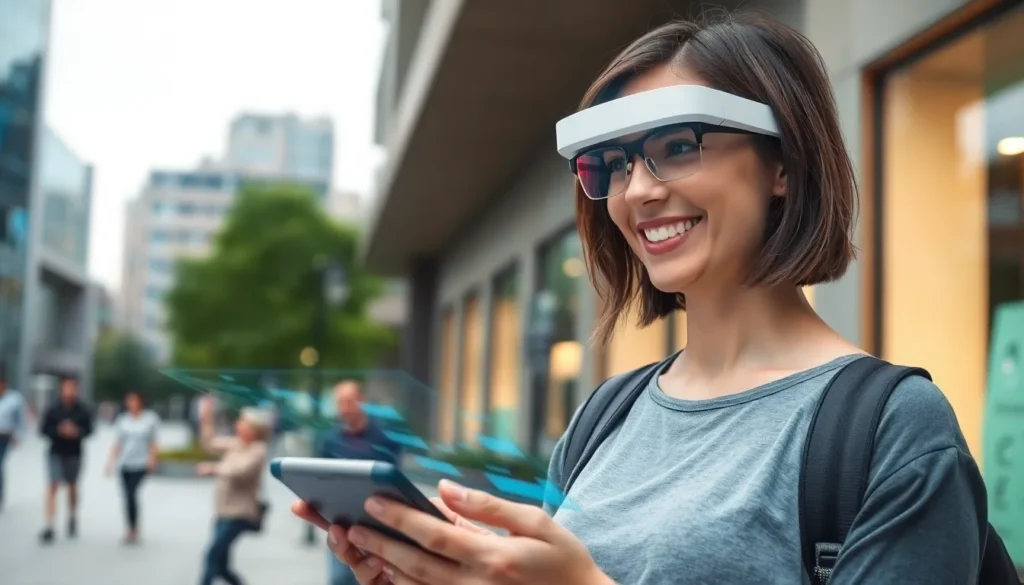
Augmented reality browsers possess several distinct features that enhance user interaction and engagement in real-world environments.
User Interface and Experience
User interface design plays a crucial role in the effectiveness of augmented reality browsers. Intuitive layouts allow users to navigate seamlessly. Engaging visual elements help capture attention. Simplified controls enable easy interactions with digital overlays. Customizable settings provide a personalized experience, catering to individual preferences. Real-time feedback enhances user satisfaction and ensures smoother operations. Ultimately, effective user experiences foster greater engagement with content.
Compatibility and Accessibility
Compatibility ensures augmented reality browsers function across various devices. Support for smartphones, tablets, and smart glasses promotes widespread usage. Many browsers utilize augmented reality platforms that facilitate access regardless of operating systems. Accessibility features improve usability for individuals with diverse needs. Voice commands and gesture recognition offer alternative interaction methods. Cross-device functionality allows smooth transitions between gadgets, ensuring a consistent user experience. These aspects contribute to the broader adoption of augmented reality technologies.
Popular Augmented Reality Browsers
Augmented reality browsers provide unique ways for users to engage with their environment. Each browser offers distinct features and capabilities that cater to various needs.
Browser Comparison
Current AR browsers vary significantly in functionality, providing different experiences. For instance, Google Lens excels in object recognition and text translation, making it useful for educational purposes. AR Browser focuses on gaming, providing interactive experiences with 3D models. Apple’s ARKit emphasizes seamless integration with iOS apps, allowing developers to create immersive experiences. Users seeking navigation support can rely on Waze, which blends AR with real-time traffic updates. Each browser’s strengths make them appealing to specific audiences.
Unique Selling Points
Key selling points differentiate popular AR browsers from each other. Google Lens stands out with its extensive image recognition capabilities, enhancing productivity. AR Browser captivates users with engaging gaming elements, allowing interaction with the environment. ARKit boasts advanced spatial awareness, enabling realistic overlays in real time. Powerful features in Waze drive engagement by providing instant traffic information. User feedback highlights these unique offerings as significant advantages, contributing to the browsers’ overall appeal.
Use Cases for Augmented Reality Browsers
Augmented reality browsers offer various applications across different fields. They enhance experiences and improve interactions in unique ways.
Education and Training
Education benefits significantly from augmented reality browsers. They facilitate interactive learning experiences that engage students. For instance, anatomy studies become more dynamic. Students can visualize 3D models of the human body layers. History lessons gain life when users explore historical sites in AR. Such immersive tools foster deeper understanding and retention of knowledge. Training programs also utilize AR for hands-on learning. Workers practice skills in simulated environments, enhancing safety and efficiency. By bridging the gap between theory and practice, these browsers transform traditional education into an engaging journey.
Marketing and Advertising
Marketing campaigns increasingly leverage augmented reality browsers. Brands capture consumer attention through interactive ads. For instance, virtual try-ons let customers see products before purchases. Makeup brands use AR to allow users to visualize cosmetics on their faces. Retailers improve in-store experiences with AR features. Shoppers scan products to receive detailed information and special offers. Engaging visuals and interactive content increase conversion rates. Users also share their experiences on social media, amplifying brand reach. Augmented reality provides a unique platform that enhances consumer engagement and transforms advertising strategies.
Augmented reality browsers are redefining how individuals engage with their surroundings. By merging digital content with the physical world, these tools enhance everyday experiences and create new opportunities for interaction. As technology advances, the capabilities of AR browsers will continue to expand, making them indispensable in various sectors, from education to marketing.
With leading companies driving innovation, users can expect more intuitive interfaces and robust features that cater to diverse needs. The future of AR browsers looks promising, paving the way for a more immersive and interactive world where digital and physical realms coexist seamlessly.