
In a world where reality sometimes feels a bit too mundane, augmented reality (AR) swoops in like a superhero, turning the ordinary into the extraordinary. Imagine walking down the street and suddenly seeing a dinosaur strutting its stuff beside you or a friendly robot offering you coffee. That’s not just a sci-fi dream; it’s the magic of AR, and it’s here to stay.
Overview of Augmented Reality Development Companies
Augmented reality development companies play a crucial role in creating AR applications and solutions. These companies range from startups to established tech giants, each contributing unique capabilities to the AR landscape. Specialized teams within these firms focus on software development, hardware integration, and user experience design.
Client industries benefiting from AR applications include retail, education, gaming, and healthcare. Retailers leverage AR to enhance the shopping experience by allowing customers to visualize products in their environment. Educators incorporate AR to create immersive learning experiences that engage students more effectively.
Leading companies in AR development include Unity Technologies, known for its versatile game engine, and Niantic, recognized for developing location-based AR games like Pokémon GO. Others, such as Vuforia and Blippar, provide comprehensive SDKs that simplify the creation of AR applications for various platforms.
Market trends show significant growth in AR technology adoption, driven by advancements in mobile devices and increased interest from enterprises seeking innovative solutions. Reports indicate the global AR market size reached $18.8 billion in 2020 and is projected to expand at a compound annual growth rate of 43.8% through 2028.
Partnerships between development companies and brands foster innovation within the AR space. Collaborations often produce groundbreaking applications that enhance user engagement and drive higher conversion rates. As companies invest in AR technologies, they contribute to a more interconnected digital experience, blending reality with rich, interactive content.
Augmented reality development companies are at the forefront of technological innovation, creating applications that redefine how users interact with their environments. The ongoing investment and development within this field continue to unlock new possibilities, making AR an essential component of tomorrow’s digital experiences.
Key Players in the Industry
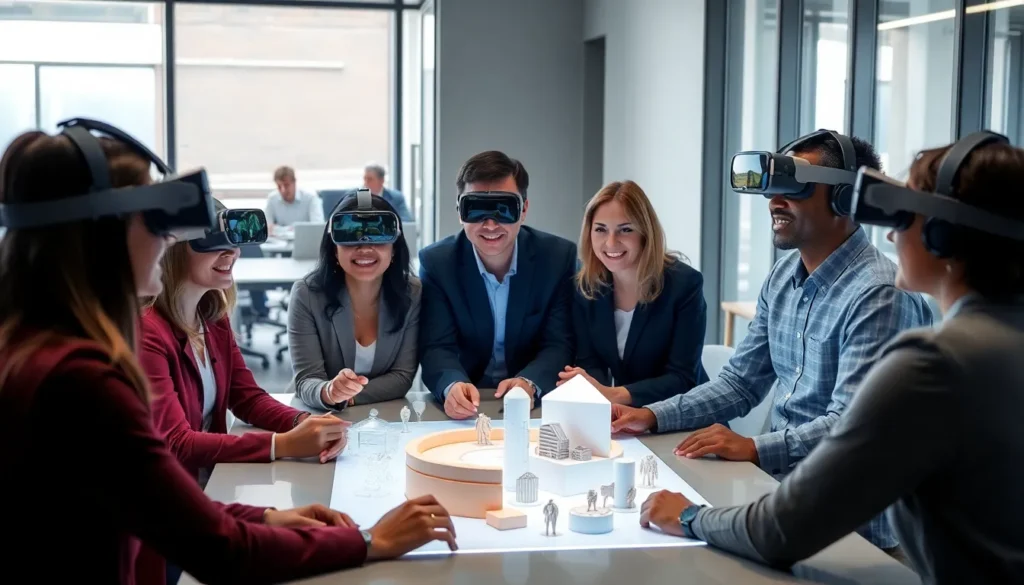
Augmented reality development companies play a pivotal role in shaping the future of AR technology. Several firms stand out as leaders in this rapidly growing market.
Established Companies
Prominent firms like Unity Technologies and Niantic lead the AR landscape. Unity specializes in real-time 3D content creation, providing developers with tools to build immersive experiences across various platforms. Niantic gained recognition through its success with Pokémon GO, demonstrating how AR can engage users in dynamic outdoor environments. These established companies excel in integrating AR into different sectors, such as gaming, education, and retail. Innovators in hardware, like Microsoft with HoloLens, also contribute significantly to the industry. Their continued investments in AR research and development signal an unwavering commitment to enhancing user experiences.
Emerging Startups
Innovative startups are also emerging in the AR space. Companies such as 8th Wall focus on web-based AR, allowing seamless experiences without app downloads. Other startups like 4D Healthcare create specialized AR solutions for the medical field, improving surgical training and patient interaction. Investing in AR enables these firms to push the boundaries of what is possible. Their agility allows rapid iteration of new ideas, promoting creativity and fresh perspectives on user engagement. As the market matures, these startups contribute to a diverse ecosystem that complements established players, enriching the AR landscape with new concepts and technologies.
Services Offered by Augmented Reality Development Companies
Augmented reality development companies provide a wide range of services tailored to meet the needs of various industries. Their expertise spans custom solutions and consulting services that drive innovation.
Custom AR Solutions
Custom AR solutions enhance user experiences by integrating unique features that meet specific client requirements. Companies offer personalized applications designed for diverse sectors such as retail, healthcare, and education. These tailored experiences can include interactive product showcases for retailers or immersive simulations for training in healthcare. By utilizing cutting-edge technology, firms create engaging, intuitive applications that connect the digital world with physical environments. This adaptability allows businesses to stand out in competitive markets while improving customer interaction.
Consulting Services
Consulting services are crucial in shaping effective AR strategies for organizations. Augmented reality development companies analyze client needs and market trends to provide data-driven recommendations. They help businesses understand how to leverage AR technology to optimize operational efficiency and enhance user engagement. Furthermore, experts guide clients through the entire process, from ideation to implementation. Firms focus on aligning AR solutions with overall business goals, ensuring that technology investments yield maximum returns. These consulting services streamline the adoption of augmented reality, positioning companies for future growth and innovation.
Factors to Consider When Choosing a Company
Choosing the right augmented reality development company involves several important factors. Assessing their expertise and offerings helps ensure alignment with specific project requirements.
Portfolio and Experience
Reviewing a company’s portfolio reveals its past projects and expertise. Experience in various industries such as retail and healthcare showcases the company’s versatility. Examine case studies to understand how they addressed client needs and challenges. An impressive portfolio indicates skill in creating engaging AR applications. Companies like Unity Technologies provide a wealth of examples that demonstrate their capabilities. Diverse project involvement reflects a company’s adaptability to different market demands. Check for client testimonials that highlight successful partnerships and outcomes.
Technology Stack
Evaluating the technology stack used by a development company is crucial. A strong tech foundation enhances the quality and functionality of AR solutions. Look for companies that use advanced platforms, such as Unity or ARKit, to ensure compatibility with current devices. Tools and frameworks should support various operating systems for broader outreach. Investigate the company’s commitment to integrating emerging technologies like machine learning and computer vision. These capabilities can significantly impact user engagement and experience. Companies that prioritize a robust technology stack position themselves for long-term success in the fast-evolving AR landscape.
Trends in Augmented Reality Development
Augmented reality development is experiencing rapid evolution, underscored by several key trends. User-generated content has risen significantly, enabling individuals to contribute to AR experiences. Companies are leveraging social media platforms for this purpose, creating more interactive engagements.
Collaboration with 5G technology enhances AR applications. The increased bandwidth allows for seamless data transfer, resulting in smoother, more immersive experiences. As more locations become 5G-enabled, AR functionality will expand across sectors like gaming and retail.
Artificial intelligence integration plays a critical role in AR applications. AI technology improves object recognition, making interactions more intuitive and personalized. Developers are focusing on machine learning algorithms, which enable AR to adapt to user behavior and preferences.
AR cloud technology is emerging as another trend, creating persistent digital layers that enrich physical environments. This concept allows users to access shared AR experiences, fostering community interactions in real time. Businesses see value here, as they can create unique, location-based experiences for consumers.
In addition, the rise of low-code and no-code platforms is democratizing AR development. These tools empower non-technical users to create AR applications quickly, expanding the talent pool in the industry. Such platforms facilitate innovation by making AR accessible to a wider range of creators.
Furthermore, a strong focus on user experience design is shaping AR solutions. Companies prioritize intuitive interfaces and engaging content to enhance user satisfaction. Through careful design choices, AR developers ensure that applications are not only functional but also enjoyable.
Diverse applications across sectors continue to gain traction. Healthcare professionals are creating AR simulations for training, while retailers utilize AR for virtual try-ons. These varied uses illustrate AR’s potential to transform everyday experiences, directly impacting consumer behavior.
Challenges in the Industry
Augmented reality development companies face several significant challenges that can impact their projects and growth. High development costs often deter small businesses from entering the field, meaning those with limited budgets struggle to create competitive AR solutions. Additionally, complex hardware requirements can hinder accessibility; users may need specialized devices for optimal experiences.
User experience design presents its own set of difficulties. Maintaining intuitive interfaces is crucial; AR applications must seamlessly blend with the physical environment. If user interactions become disjointed, engagement levels drop significantly. Complicated interactions frustrate users and can lead to abandonment.
Market competition is fierce, especially with numerous startups emerging. Companies must differentiate themselves through innovative features and unique applications. Staying updated with rapidly evolving technology plays a critical role in maintaining a competitive edge. When new advancements arise, it challenges existing solutions and drives continuous improvement.
Moreover, privacy concerns complicate data usage. AR development companies collect user information to enhance experience. Striking a balance between personalization and data security often requires careful ethical considerations. If privacy issues arise, companies may lose user trust, affecting overall adoption rates.
Regulatory compliance also presents challenges. Different regions have varying laws regarding data sharing and digital content, making it vital for companies to stay informed and adaptable. When regulations change, development strategies may require significant adjustments.
Lastly, the need for effective collaboration among stakeholders can pose hurdles. Partnerships between tech firms, content creators, and brands are essential for innovation. Disconnected communication among teams can slow down project timelines and affect overall quality.
Augmented reality development companies are pivotal in shaping the future of technology. Their innovative solutions bridge the gap between the digital and physical worlds, enhancing user experiences across various sectors. As AR continues to evolve, these companies will play a crucial role in driving adoption and integration.
With emerging trends like user-generated content and advancements in AI, the landscape is ripe for growth. Organizations must carefully choose development partners that align with their vision and needs. By leveraging AR technology, businesses can unlock new opportunities and engage users in ways previously thought impossible. The future of augmented reality is bright, and those who embrace it will likely lead the charge into a more interactive and immersive world.