
Imagine a world where technicians can fix machinery without ever breaking a sweat—or a sweatband. Welcome to the realm of augmented reality field service, where real-world challenges meet cutting-edge technology. This innovative approach transforms how businesses tackle maintenance and repairs, making the process as seamless as a perfectly brewed cup of coffee.
Overview of Augmented Reality Field Service
Augmented reality (AR) field service enhances maintenance and repair tasks through real-time information and visuals. Technicians access critical data while keeping their hands free. This technology overlays digital information in the technician’s view, helping to diagnose issues swiftly.
Applications of AR range across various industries, including manufacturing and telecommunications. In manufacturing, AR supports assembly and quality control processes. Telecommunications benefits through improved installation and troubleshooting procedures.
Efficiency increases significantly when using AR tools. A study by PTC indicated that AR can reduce service time by up to 50%. Technicians resolve complex problems faster, which minimizes equipment downtime.
Cost savings also result from utilizing AR in field service. Companies notice lower training expenses as onboarding becomes streamlined. New employees learn faster with guided, visual instructions overlaying real-world environments.
AR devices exhibit versatility, such as smart glasses and mobile applications. Smart glasses allow technicians to view diagrams alongside equipment, improving hands-on training. Mobile AR applications enable workers to use smartphones for scanning and troubleshooting equipment effectively.
Scalability stands as a crucial advantage. Implementing AR solutions accommodates various company sizes. Small businesses gain access to tools previously reserved for larger enterprises, leveling the playing field.
Feedback from field technicians highlights increased job satisfaction when using AR. Enhanced accuracy and reduced physical strain contribute to a more enjoyable work experience. Overall, AR field service technologies present a transformative shift in how technicians perform their daily tasks.
Benefits of Augmented Reality in Field Service
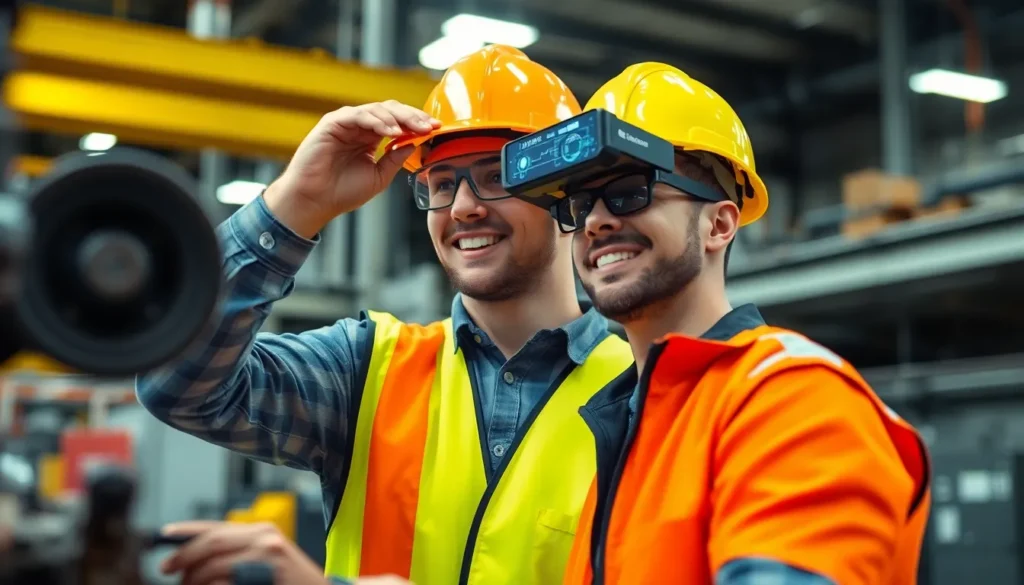
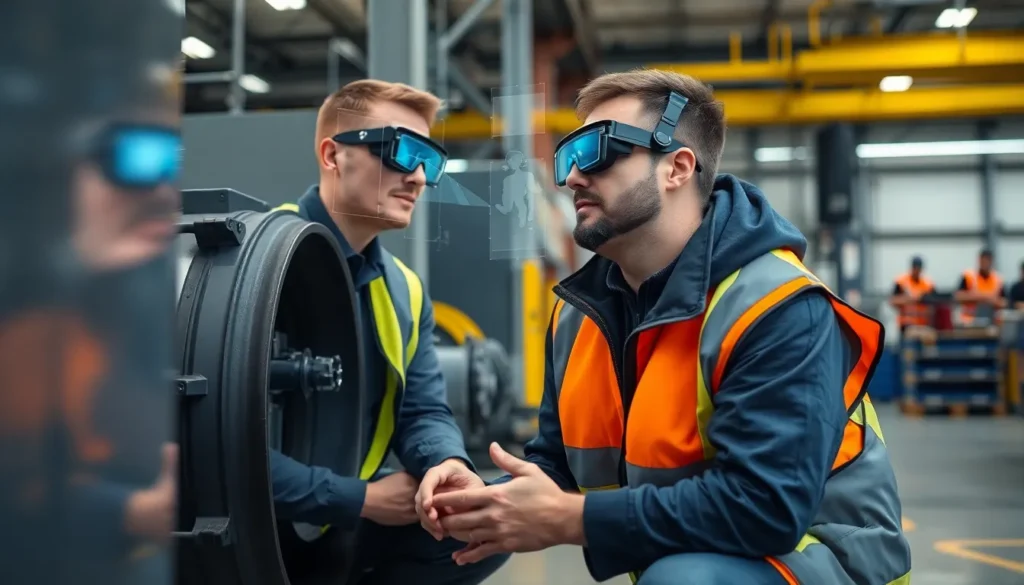
Augmented reality (AR) significantly impacts field service by enhancing operational capabilities and overall efficiency. Its applications lead to numerous advantages across various sectors.
Enhanced Efficiency and Productivity
AR tools streamline processes for technicians, enabling faster, more precise problem resolution. Accessing digital overlays improves the speed at which issues are diagnosed and addressed. The potential to reduce service time by 50% underscores this efficiency. Technicians can resolve complex issues with less downtime, which directly correlates to increased productivity. Immediate access to critical information saves technicians from searching for manuals or resources, optimizing their performance on-site. As a result, companies experience improved service delivery, ensuring customer satisfaction and loyalty.
Improved Training and Onboarding
Training programs benefit immensely from AR technologies, simplifying the onboarding process for new employees. Visual, guided instructions enhance the learning experience, allowing trainees to engage with real-time information. Statistics demonstrate that AR leads to reduced training times, enabling new technicians to gain proficiency swiftly. Moreover, augmented reality creates immersive learning environments, increasing retention and understanding of complex tasks. Providing immediate access to diagrams and troubleshooting procedures boosts confidence among new hires, reducing their reliance on seasoned staff. Overall, AR transforms how organizations approach training, resulting in a competent workforce ready to tackle challenges efficiently.
Key Technologies Behind Augmented Reality Field Service
Several key technologies drive the effectiveness of augmented reality in field service, vastly enhancing operational efficiency and training capabilities.
Hardware Components
Smart glasses play a crucial role in AR field service. These devices allow technicians to view data hands-free while working on equipment. Mobile devices also contribute significantly; smartphones and tablets equipped with AR capabilities enable quick access to information and facilitates real-time troubleshooting. Cameras integrated into these hardware tools allow for accurate scanning of components and immediate feedback. Additionally, sensors attached to machinery can collect data and send it to technicians, ensuring they address issues effectively. Together, these hardware components create an integrated system that supports enhanced problem-solving.
Software Solutions
AR software engines are vital for interactive user experiences. They overlay digital instructions on live views of physical environments, guiding technicians step by step. Many platforms support multi-user experiences, allowing remote experts to provide assistance in real time. Customization is often possible, enabling organizations to tailor the software to specific needs. Data analytics features offer insights into service performance, helping to optimize operations over time. Overall, these software solutions not only streamline processes but also enhance data utilization, ensuring efficient service delivery.
Case Studies in Augmented Reality Field Service
Augmented reality (AR) field service showcases transformative examples across various sectors. These case studies illustrate how companies leverage AR to enhance efficiency and effectiveness in their operations.
Real-World Applications
Manufacturing utilizes AR for assembly, allowing technicians to access digital guidelines as they work. Technicians assemble machinery with visual cues overlaying physical components, reducing errors. Telecommunications firms employ AR to streamline installation processes with real-time troubleshooting visuals. Healthcare providers use AR for equipment maintenance, delivering real-time insights that improve uptime. Each implementation exemplifies AR’s capacity to boost efficiency, demonstrating how diverse industries benefit from this technology.
Success Stories
A notable success story comes from a leading manufacturing company that reduced repair times by 30% through AR tools. Field technicians accessed 3D models and assembly instructions directly in their line of sight, minimizing guesswork. Another telecommunications provider reported a 25% increase in first-time fix rates, achieved by using AR for remote expert consultations. Technicians connected with specialists who provided immediate support through AR overlays, enhancing problem-solving speed. These success stories highlight measurable impacts, underscoring AR’s effectiveness in real-world applications.
Future Trends in Augmented Reality Field Service
Augmented reality continues to evolve, shaping the future of field service across industries. Integration of artificial intelligence into AR tools promises to enhance real-time decision-making capabilities. Companies will leverage AI to analyze data instantly, enabling technicians to receive tailored recommendations as they work on-site.
Wearable technology is gaining momentum, with smart glasses becoming vital tools for technicians. These devices offer hands-free information access, allowing users to focus on tasks without distraction. Increased investment in wearables will likely lead to more advanced features, such as improved battery life and enhanced display quality.
Collaboration tools in AR create opportunities for remote assistance. Technicians can connect with experts in real-time, receiving guidance while working on complex issues. Such advancements will facilitate instant resolution of problems, reducing downtime significantly.
Data analytics will also play a crucial role in future AR developments. Companies will track performance metrics, allowing for data-driven improvements. Real-time insights will help organizations fine-tune their operations, leading to increased efficiency and customer satisfaction.
The use of AR in training will expand, providing immersive learning experiences for new employees. Interactive simulations can mimic real-world scenarios, enhancing skill acquisition and confidence. This trend will help businesses cultivate a skilled workforce, prepared to meet challenges effectively.
In addition to these advancements, the adoption of 5G technology ensures faster data transfer speeds. Reliable connectivity will enable more comprehensive AR applications in real-time environments. Enhanced performance of AR tools will lead to even greater benefits for technicians in the field.
Focusing on sustainability, AR technologies can contribute to eco-friendly practices. Reduced travel for technician support minimizes carbon footprints, aligning with corporate social responsibility goals. Businesses embracing AR solutions will find they not only improve service delivery but also positively impact the environment.
Augmented reality field service is reshaping how technicians approach maintenance and repair tasks. By providing real-time information and hands-free access to critical data, AR enhances efficiency and accuracy. This technology not only streamlines processes but also boosts job satisfaction among technicians, creating a more competent workforce.
As industries continue to embrace AR, the potential for improved service delivery and reduced downtime becomes even more apparent. The integration of advanced technologies like AI and 5G will further elevate AR’s capabilities, ensuring that organizations remain competitive in a rapidly evolving landscape. Embracing AR field service is no longer a choice but a necessity for those looking to drive operational excellence and sustainability in their operations.