
Imagine cruising down the highway with a virtual co-pilot guiding you through every twist and turn. Augmented reality in the automotive world isn’t just a sci-fi fantasy; it’s revving up to transform how people drive. From heads-up displays that project vital information right onto the windshield to navigation systems that make finding the nearest coffee shop feel like a video game, AR is all about making driving safer and more enjoyable.
Overview of Augmented Reality for Automotive
Augmented reality (AR) transforms the automotive landscape by integrating digital information with the real world. This technology enhances safety and convenience, thereby improving the overall driving experience. Heads-up displays represent one prominent application, projecting critical data, such as speed and navigation directions, directly onto windshields.
Interactive navigation systems make finding locations simpler and more efficient. Drivers receive turn-by-turn guidance, which appears overlaid on the actual road view, reducing the need to glance away at devices. Enhancements in AR technology, such as 3D mapping, allow for more precise displays of surroundings, leading to better route comprehension.
Automakers integrate AR into vehicle designs to innovate user interfaces. Features include gesture recognition, which enables drivers to control navigation and entertainment systems using hand movements. This hands-free capability promotes focus on the road, minimizing distractions.
AR can also assist in maintenance by providing real-time information about vehicle systems. Technicians can receive visual instructions during repairs and diagnostics, improving efficiency and accuracy.
A notable example of AR in action is the collaboration between automotive manufacturers and tech companies to develop advanced driver-assistance systems (ADAS). These systems utilize AR to display warnings for potential hazards, significantly enhancing driver awareness and reaction times.
Collaboration within the industry fosters rapid advancements in AR applications. Consequently, manufacturers are continuously exploring new ways to leverage AR technology, promising further enhancements to the driving experience. The automotive sector embraces this innovative technology, revealing its profound potential to reshape transportation entirely.
Key Benefits of Augmented Reality
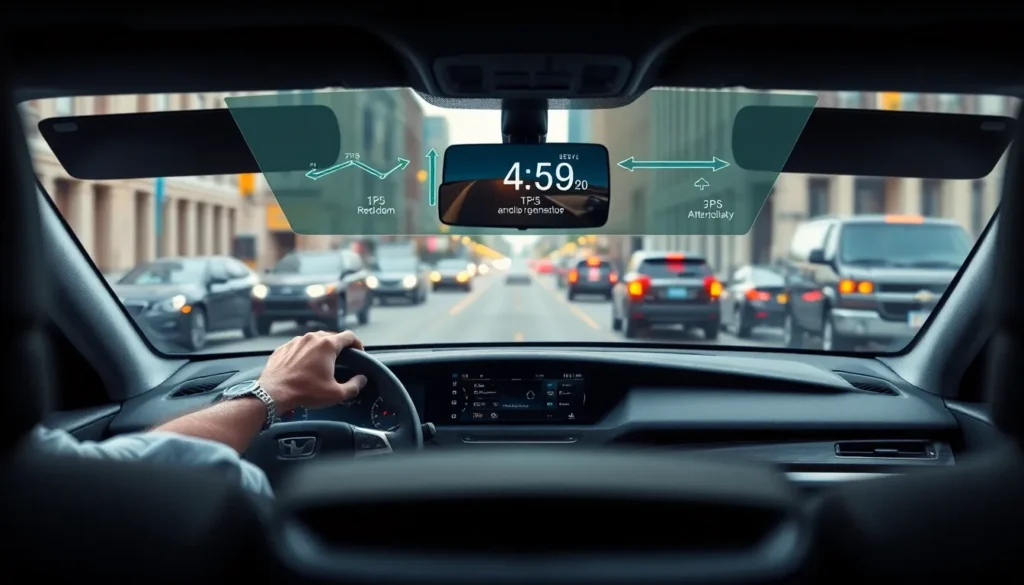
Augmented reality (AR) offers several key benefits in the automotive sector, significantly enhancing both safety and user experience.
Enhanced Safety Features
AR improves safety features by providing drivers with crucial information in real time. Heads-up displays project data directly onto the windshield, enabling drivers to view speed and navigation without looking away from the road. Real-time hazard warnings enhance awareness, allowing drivers to respond quickly to potential dangers. Gesture recognition technology facilitates hands-free control, reducing distractions caused by manual tasks. Technology-driven collaboration between automotive manufacturers and software developers creates increasingly sophisticated driver-assistance systems. Evidence indicates that these systems, which leverage AR, lead to a noticeable decrease in accident rates. Adding augmented reality into safety protocols elevates the overall driving experience while prioritizing passenger protection.
Improved Navigation Systems
Improved navigation systems benefit significantly from augmented reality applications. AR overlays digital maps onto the real world, providing intuitive guidance for drivers. Enhanced clarity helps users identify turn directions and points of interest quickly. Navigation becomes more interactive, simplifying the process of finding destinations. Systems equipped with AR can adapt routes based on real-time traffic data, further streamlining travel. Innovations in gesture recognition allow drivers to modify navigation settings without taking their hands off the wheel. As a result, the combination of intuitive navigation and seamless interaction minimizes frustration while improving overall satisfaction. With AR’s integration in navigation systems, driving evolves into a more efficient experience.
Applications of Augmented Reality in Automotive
Augmented reality significantly enhances various aspects of the automotive industry. From improving in-car displays to refining driver assistance, this technology reshapes user experiences.
In-Car Display Systems
In-car display systems leverage augmented reality to provide essential information to drivers. Heads-up displays project navigational details, speed, and alerts directly onto the windshield. Such integration enables drivers to maintain focus on the road while accessing vital data. Additionally, these systems can adjust visuals based on real-time traffic conditions, allowing for smoother navigation. Different manufacturers continue to enhance display interfaces, ensuring clear visibility and interaction.
Driver Assistance Systems
Driver assistance systems incorporate augmented reality to boost overall safety. Real-time hazard warnings appear virtually on dashboards, keeping drivers aware of their surroundings. Collision prevention systems utilize AR to visualize potential dangers and suggest corrective actions. By doing so, these systems not only raise driver awareness but also drastically reduce accidents. Continuous advancements in AR technology contribute to the evolution of these assistance features, enhancing driving safety significantly.
Training and Maintenance Solutions
Training and maintenance solutions use augmented reality to facilitate efficient vehicle servicing. Technicians benefit from real-time visual instructions and overlays, simplifying complex repair tasks. By enhancing understanding of vehicle systems, AR reduces training time and improves accuracy in maintenance procedures. Many automotive companies implement AR for ongoing technician development, ensuring skills remain current. This innovative approach to training streamlines workflows and boosts service quality across the industry.
Challenges and Limitations
Augmented reality in the automotive industry faces several challenges and limitations that impact its adoption and effectiveness. This technology requires overcoming technical barriers and gaining user acceptance.
Technical Constraints
Technical constraints significantly influence the integration of AR in automotive applications. Limited processing power in some vehicles can hinder AR systems’ ability to deliver real-time data. Environmental factors, like variable lighting and weather conditions, affect the accuracy of AR displays. Additionally, ensuring system compatibility across different vehicle models poses a challenge for developers. Network connectivity limitations may restrict the ability to access real-time updates, which compromises the user experience. Hardware requirements, such as high-resolution displays and sensors, demand investment that some manufacturers may find prohibitive.
User Acceptance
User acceptance remains a critical factor in the successful implementation of AR in vehicles. Many drivers express concerns regarding the distraction caused by information overlays during driving. Some individuals feel overwhelmed by an influx of data and prefer traditional navigation methods. Trust in the technology’s reliability and accuracy influences acceptance significantly. Furthermore, varying user familiarity with advanced tech can create a divide in comfort levels when using AR features. Educational initiatives targeting both drivers and technicians could promote a better understanding of AR benefits and functionalities. Addressing these concerns fosters a smoother transition to advanced automotive technologies.
Augmented reality is poised to revolutionize the automotive industry by enhancing safety and improving the overall driving experience. Its ability to integrate real-time information directly into the driver’s line of sight allows for more focused attention on the road. As manufacturers and tech companies collaborate on advanced driver-assistance systems, the potential for AR applications continues to expand.
While challenges such as technical limitations and user acceptance remain, the ongoing development of AR technologies promises to address these issues over time. With educational initiatives aimed at increasing understanding and trust in AR, drivers and technicians alike can benefit from its innovative features. The future of driving is set to become more intuitive and safer, thanks to the transformative power of augmented reality.