Ever wondered what would happen if manufacturing took a leap into the future and grabbed hold of the wild, imaginative world of augmented reality (AR)? Picture this: assembly lines adorned with holograms, workers guided by digital blueprints, and invaluable data displays floating seamlessly in their line of sight. Augmented reality isn’t just a sci-fi fantasy anymore. It’s a game-changer poised to elevate the manufacturing sector by enhancing efficiency, reducing errors, and increasing safety. Welcome to the fascinating realm where reality and technology collide, let’s dive right in.
Understanding Augmented Reality in Manufacturing
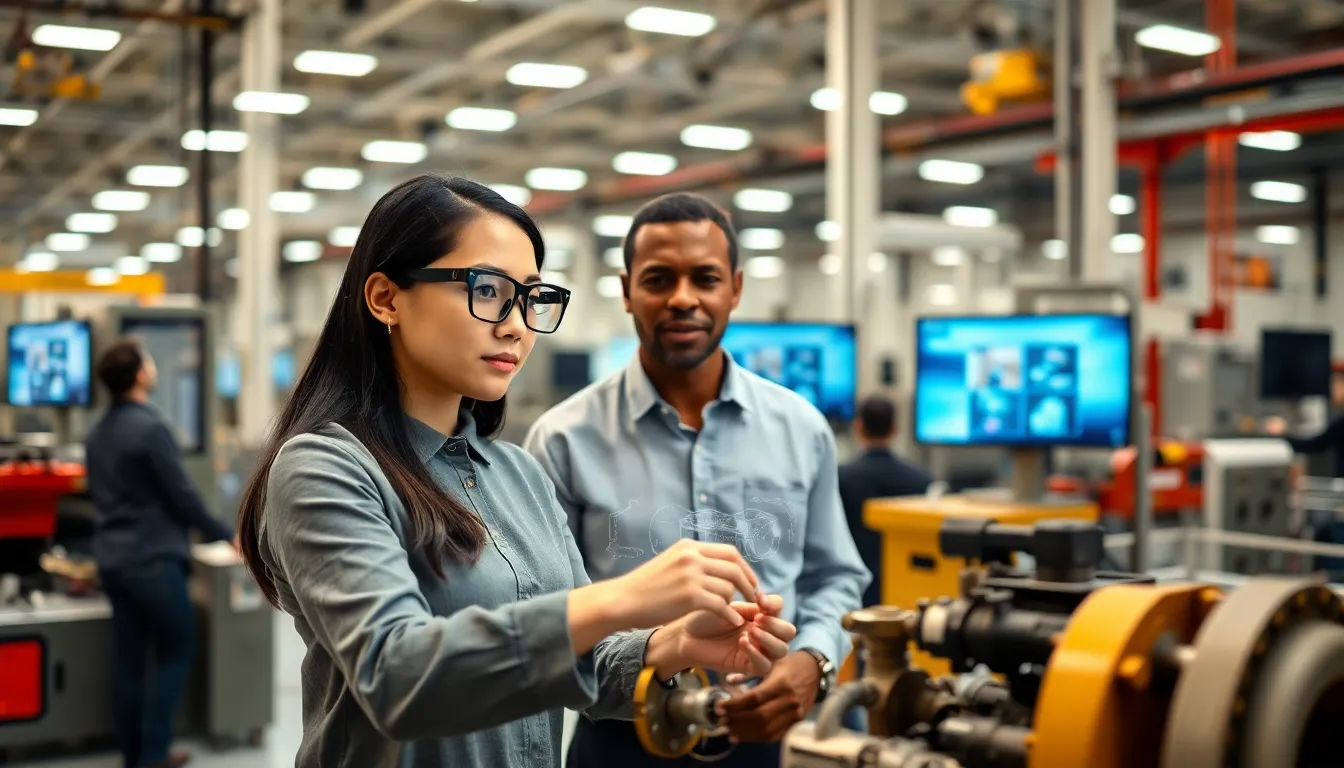
To truly appreciate the impact of augmented reality in manufacturing, it’s essential to define what it actually means. Augmented reality overlays digital information onto the physical world, creating a unique blend that enhances perception. Instead of getting lost in a sea of blueprints or confusing instructions, manufacturers can now leverage AR to visualize complex processes more intuitively.
At its core, AR involves devices like smart glasses, tablets, or mobile apps that project useful information, think of it as supercharged instructions crossing paths with real-world tasks. Imagine an apprentice assembling machinery while wearing glasses that project step-by-step guidance. This convergence offers clarity, the kind that helps to considerably reduce the learning curve in manufacturing tasks.
Benefits of Augmented Reality in Manufacturing
The benefits of incorporating augmented reality into manufacturing processes are not just buzzwords: they’re real advantages that reshuffle the entire landscape. First, consider productivity. By utilizing AR, workers can access critical information without diverting their attention from the task at hand, leading to quicker decision-making and task completion. This efficiency can have a significant ripple effect on throughput and overall production timelines.
Next up is training. With AR, training no longer involves lengthy manuals or boring PowerPoints. New employees can visualize their tasks in real-time scenarios, learning faster and retaining information better. AR-powered training methods can lead to reduced errors in assembly and operations, as workers gain hands-on experience in a safe, controlled environment.
Also, quality assurance takes a leap forward with AR. By providing real-time feedback and overlaying quality metrics during assembly, manufacturers can spot issues before they escalate. So, this reduces waste and enhances product quality, eventually leading to satisfied customers and stronger brand loyalty.
Applications of Augmented Reality in Manufacturing
Augmented reality opens the door for a spectrum of applications within manufacturing. In the design phase, engineers can visualize and adjust prototypes in a simulated environment, allowing them to see how different components interact. This capability not only enhances creativity but also reduces time and costs related to physical prototypes.
On the factory floor, AR can guide maintenance procedures, helping technicians perform repairs accurately while minimizing downtime. Workers equipped with AR glasses can receive real-time diagnostics and guidance, simplifying complex troubleshooting that would otherwise require extensive manuals or expert intervention.
Finally, AR can streamline shipping and logistics operations. Packaging teams can leverage AR to ensure that items are packed accurately and efficiently, thereby reducing the risk of shipping errors. In effect, these applications demonstrate that augmented reality’s possibilities extend well beyond mere enhancement, they can truly revolutionize how manufacturing operates.
Challenges and Limitations of Augmented Reality Implementation
Even with its numerous advantages, implementing augmented reality in manufacturing isn’t without its challenges. One major hurdle is the initial investment in AR technology. High-quality AR devices can be expensive, and the costs associated with software development and infrastructure may be daunting for some manufacturers.
Also, integrating AR systems with existing manufacturing processes can be complex. Companies need to adapt their workflows, and this adjustment often requires comprehensive training for employees to ensure smooth transitions.
There’s also the issue of data security. As AR systems rely heavily on the seamless exchange of information, safeguarding sensitive data becomes crucial. Manufacturers must invest in robust cybersecurity measures to protect their systems from potential breaches.
Future Trends in Augmented Reality for Manufacturing
The future of augmented reality in manufacturing looks promising, with trends emerging that could expand its impact. One key direction is the continued refinement of AR technologies, making them more user-friendly and affordable for manufacturers of all sizes. The proliferation of 5G technology will also allow for faster data transmission, making real-time AR applications even more reliable and responsive.
Also, AI integration with AR is on the horizon. This combination could pave the way for predictive maintenance, machines equipped with AR interfaces analyzing their own health and providing troubleshooting feedback to operators before issues arise.
As industries increasingly prioritize sustainability, AR could also play a pivotal role. Visualizing energy consumption and waste generation in real-time could enhance decision-making around resource use, contributing to greener manufacturing processes.