
Imagine snapping a photo of your friend and suddenly, a dinosaur pops up in the background, striking a pose. Welcome to the wacky world of augmented reality photography, where the line between reality and imagination blurs. This innovative tech isn’t just for gamers anymore; it’s transforming how people capture and share their lives.
With augmented reality, every snapshot can tell a story that’s limited only by creativity. Why settle for a boring old selfie when you can add a floating unicorn or a flying pizza? As this trend takes off, photographers are discovering new ways to engage audiences and elevate their art. Get ready to dive into a realm where the ordinary becomes extraordinary, and every click of the shutter is an adventure waiting to unfold.
Overview Of Augmented Reality Photography
Augmented reality photography merges real-world images with digital enhancements. This technology allows users to overlay virtual objects onto actual scenes, creating dynamic and captivating visuals. Photographers explore a variety of effects, transforming standard snapshots into imaginative experiences.
Many applications enable real-time editing and layering of digital content onto images. Tools like Snapchat or Instagram filters offer users the ability to insert animated creatures or whimsical effects into their photos. This playful interaction encourages creativity and experimentation in photography.
Mobile devices serve as primary tools for augmented reality photography, making it accessible to a broad audience. Smartphones equipped with AR capabilities allow users to easily capture, edit, and share enhanced images. Furthermore, this technology extends beyond entertainment, finding applications in marketing, art, and education.
Collectives of artists also embrace augmented reality photography to push creative boundaries. Projects that integrate AR elements can engage audiences in unique ways, merging storytelling with interactivity. Besides traditional photography, this technique invites collaboration across disciplines, enhancing both the artistic process and final presentation.
The potential for augmented reality photography continues to grow, with advancements regularly enhancing user experiences. As technology evolves, so does the creativity of those who utilize it. Individuals and brands that leverage augmented reality can attract more attention and engage their audiences more effectively.
Key Features Of Augmented Reality Photography
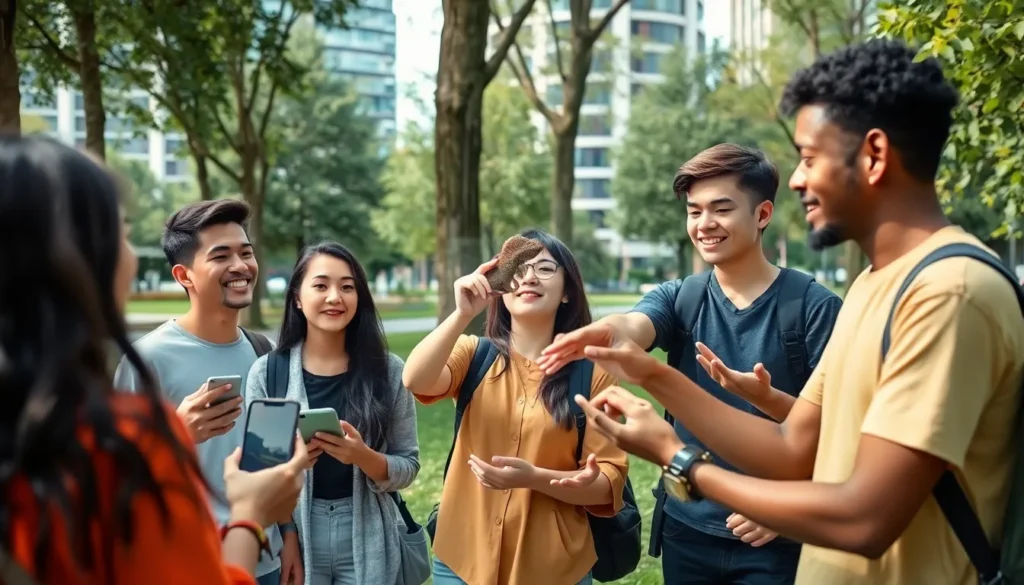
Augmented reality photography offers unique features that enhance visual storytelling. Interactive elements and enhanced user experiences stand out as fundamental components.
Interactive Elements
Interactive elements play a crucial role in augmented reality photography. Users engage with digital objects that can be placed within real-world environments. They can manipulate these objects, changing their size, orientation, or position. Such interactivity allows for deeper engagement with the captured images. Creators actively invite viewers to explore their compositions. For example, a photo featuring a virtual dinosaur can respond to users’ movements, making the experience immersive. This level of interaction helps establish a personal connection between the audience and the artwork.
Enhanced User Experience
The enhanced user experience significantly shapes augmented reality photography. By merging digital content with real-life contexts, this technology creates a more dynamic and captivating viewing experience. Users can witness depth, layers, and movements that traditional photography lacks. Elements like sound effects, animations, or contextual information further enrich images. As photographers combine multiple digital layers, they can craft narratives that resonate. Additionally, social media platforms featuring AR filters encourage sharing and collaboration among users. This communal aspect fosters creativity, allowing individuals to engage actively with their surroundings.
Benefits Of Augmented Reality Photography
Augmented reality photography offers numerous benefits that enhance creative potential and accessibility. This innovative approach not only broadens artistic horizons but also encourages wider participation.
Creative Expression
Creative expression flourishes through augmented reality photography. Artists incorporate digital effects that elevate standard images to captivating visual stories. Unique filters and overlays add a personal touch, allowing individuals to portray emotions in new ways. Enhanced interactivity engages viewers, creating immersive experiences that traditional photography lacks. By blending fantasy with reality, photographers craft compelling narratives that resonate on deeper levels. This artistic fusion inspires experimentation and invites collaboration among diverse groups. Artists can push creative boundaries, making art more dynamic and engaging.
Accessibility
Accessibility remains a significant advantage of augmented reality photography. The widespread availability of smartphones with AR capabilities enables a broader audience to engage with this technology. Various applications like Instagram and Snapchat simplify the process, making it user-friendly for individuals of all skill levels. No longer confined to professional studios, photographers can create stunning visuals anywhere. This democratization of content creation fosters a more inclusive environment, allowing people from different backgrounds to showcase their perspectives. Enhanced sharing options promote interaction, enabling users to connect and collaborate easily in vibrant online communities.
Popular Tools And Applications
Augmented reality photography relies on various software and hardware tools that enhance user experience and creative potential. The right choices can make a significant difference in how artists engage with digital content.
Software Options
Numerous software applications cater to augmented reality photography, enabling users to create and manipulate images easily. Snapchat offers a wide array of AR filters for dynamic storytelling. Instagram provides similar features, allowing users to transform ordinary photos into captivating experiences with just a tap. Adobe Aero also stands out, empowering designers to craft interactive AR content seamlessly. Additionally, Spark AR Studio lets creators build custom effects for Facebook and Instagram, enhancing digital interactivity across platforms. These tools encourage experimentation, fostering creativity in different artistic expressions.
Hardware Requirements
Essential hardware plays a crucial role in maximizing augmented reality photography potential. Mobile devices with AR capabilities, particularly recent smartphone models, provide the necessary technology for capturing layered visuals. These devices typically feature advanced sensors, cameras, and processors to facilitate real-time interaction and rendering. Tablets also serve as effective alternatives for users seeking larger displays while engaging with AR content. Some photographers take advantage of smart glasses, which offer immersive experiences and hands-free operation. Investing in high-quality lenses can enhance the overall photography experience, significantly improving image clarity and detail.
Future Trends In Augmented Reality Photography
AR photography continues to evolve, driven by advancements in technology and user creativity. Artificial intelligence plays a key role in enhancing image recognition and processing, making digital overlays more seamless and integrated with real-world environments. This will lead to increasingly realistic and immersive experiences for users as new tools become widely available.
Increased availability of 5G technology allows for faster data transmission, paving the way for smoother interactions with AR content. Users can expect real-time adjustments and renderings, transforming ordinary photos into captivating narratives featuring interactive elements. Developers are also focusing on improved user interfaces, ensuring that creating AR photographs becomes intuitive for photographers of all skill levels.
Social media platforms will likely expand their AR features, enabling enriched sharing experiences. Advanced filters and effects might soon include options for personalization and customization, allowing users to express their unique perspectives. Industry collaboration is expected to rise, as photographers team up with software developers to explore new frontiers in digital storytelling.
Emerging AR hardware, such as smart glasses and headsets, demonstrates potential for redefining how AR photography is experienced. These devices could provide users with hands-free opportunities to capture and share moments, bridging the gap between physical and digital realities. Exploring education and training for AR integration into photography can also enhance skills and foster creativity in the community.
The trend also indicates a growing focus on sustainability and ethical practices within AR photography. Photographers might prioritize environmentally responsible virtual elements, raising awareness of ecological issues through their work. As this innovative field expands, it will continue shaping artistic expression while encouraging collaboration and inclusivity among creators.
Augmented reality photography is transforming the landscape of visual storytelling. By blending the physical and digital worlds, it opens up new avenues for creativity and engagement. Photographers are no longer limited to traditional methods; they can now infuse their work with interactive elements that captivate audiences.
With the rise of user-friendly applications and advanced mobile technology, anyone can explore this exciting medium. As AR photography continues to evolve, it promises to enhance artistic expression and foster a more inclusive creative community. The future holds endless possibilities for those willing to embrace this innovative approach, making it an essential tool for artists and enthusiasts alike.